
Shotengai in Osaka : 10 Osaka Shopping Streets Worth Exploring
Osaka isn’t just about neon signs and famous street food. Walk a few blocks in almost any neighborhood, and you’ll find a shotengai—a covered shopping street. These arcades are practical, weatherproof, and local by design. Once, Osaka’s shotengai were the heartbeat of daily life. Some feel crowded and noisy, others quiet and worn, but together they show how people in Osaka actually shop, eat, and move through the city.
Many of these streets were never meant to impress visitors. They exist for routine errands, quick meals, and familiar faces. Some now attract tourists, while others still serve the same neighborhoods they always have. Below are ten shopping streets that reflect those different roles, from famous corridors to streets that quietly carry on.
Osaka Shotengai Across the City
Some of these arcades draw visitors, while others exist almost entirely for the surrounding neighborhood. Together, they show how everyday shopping continues inside Osaka shotengai, even as habits and foot traffic slowly change. Together, they form a practical cross-section of Osaka shotengai today.
Below are ten shopping streets that show different sides of the city, from hyper-touristy corridors to community-focused streets that still feel untouched.
Osaka’s Shotengai: Exploring Osaka’s Everyday Shopping Streets
1. Ebisubashi–Shinsaibashi-suji Shopping Street
This is one of the most visible examples of Osaka shotengai, where heavy foot traffic and daily commerce overlap.
Ebisubashi-suji connects Namba Station with Dotonbori and sees constant foot traffic. Nearly everyone heading toward the canal passes through here, which explains the crowds.
Beyond Dotonbori, the street becomes Shinsaibashi-suji Shopping Street and continues north along Midosuji Boulevard to Honmachi Station. The full stretch runs almost two kilometers. Walking it without stopping takes about 45 minutes, but browsing easily turns it into a two-hour walk.
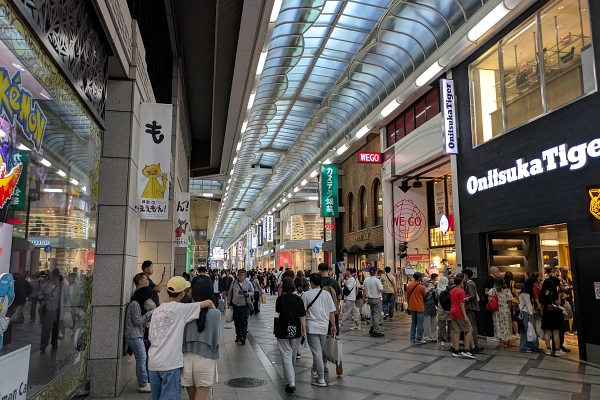
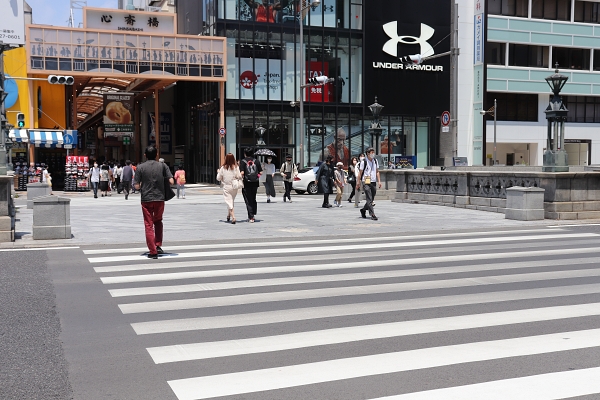
This street hosts some of Osaka’s most recognizable shops, including Daimaru Shinsaibashi, 551 Horai’s pork buns, and Rikuro’s cheesecake. On weekends, voices echo under the arcade, and the smell of fried snacks lingers constantly. The original Shinsaibashi bridge still exists in name only, as the river itself disappeared long ago.
2. Dotonbori Shopping Street
Located just steps from Namba, Dotonbori is one of Osaka’s most famous areas. It began as an entertainment district lined with theaters, including the historic Takemotoza. Today, it draws visitors with takoyaki stands, long-running restaurants, and oversized signboards.
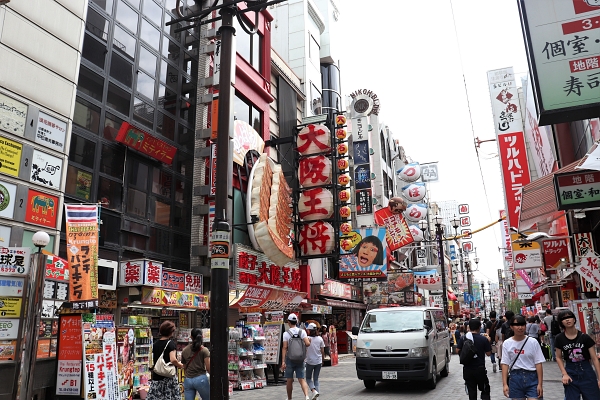
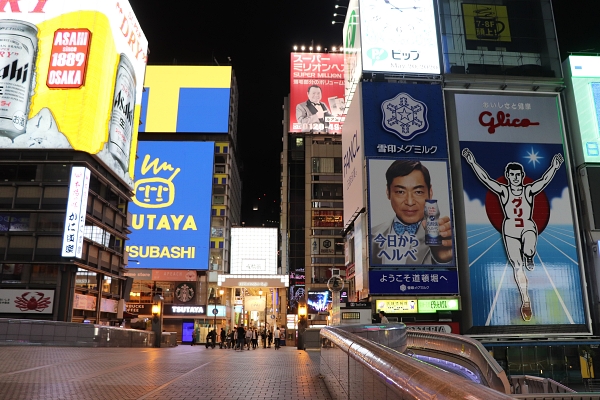
The shopping street itself stretches only a few hundred meters, but it feels dense and loud. Music spills from storefronts, and staff shout greetings toward passing crowds. It connects directly to Shinsaibashi-suji, Ebisubashi-suji, and Sennichimae.
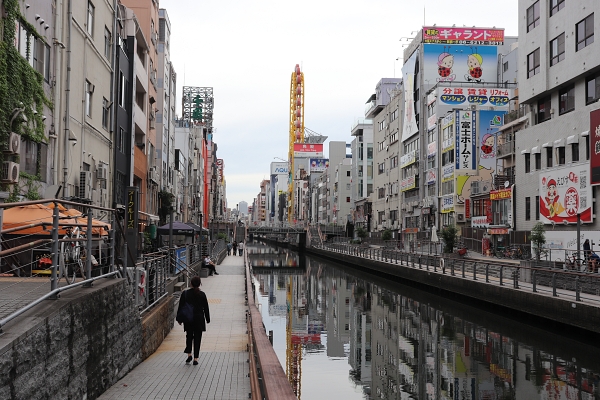
While the left bank holds the main shopping street, the right bank, Sueemon-cho, anchors Minami’s nightlife scene.
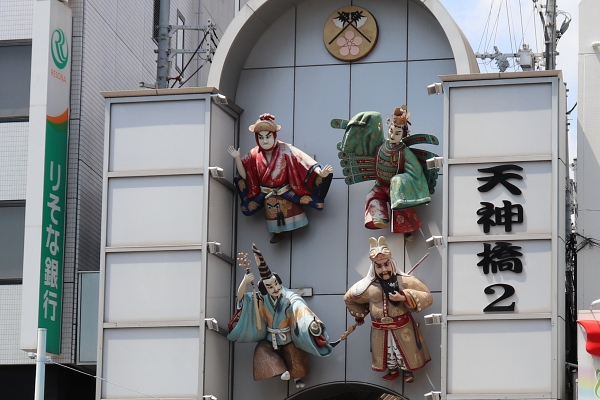
3. Tenjinbashisuji Shopping Street
Often cited when discussing large-scale Osaka shotengai, this street shows how arcades still function at a neighborhood level.
Stretching 2.6 kilometers, Tenjinbashisuji Shopping Street is the longest in Japan. It runs from Tenjinbashisuji 6-chome to the Tenjinbashi Bridge and contains more than 600 shops.
You’ll find everything from traditional eateries to casual cafés and small specialty stores. Shutters open early here, and regulars move with purpose rather than curiosity. The street passes near Osaka Tenmangu Shrine and remains lively from one end to the other, which is increasingly rare.
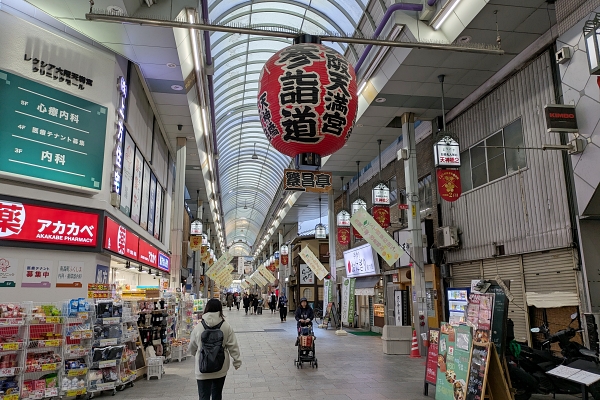
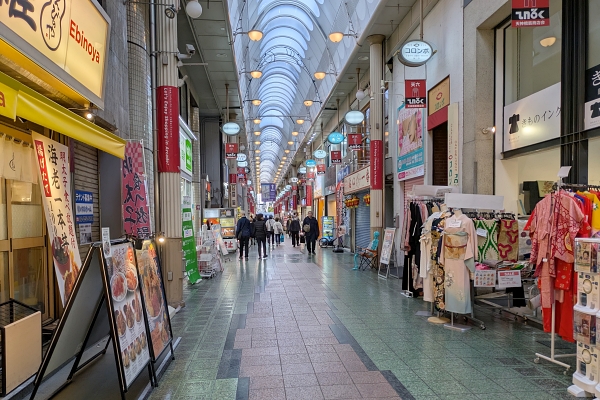
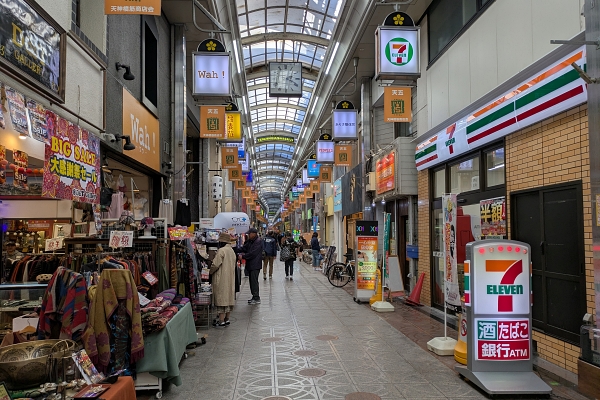
Once dominated by locals, the area now attracts more visitors, but the everyday atmosphere remains intact. Walking the full length gives you a clear sense of Osaka’s unfiltered personality.
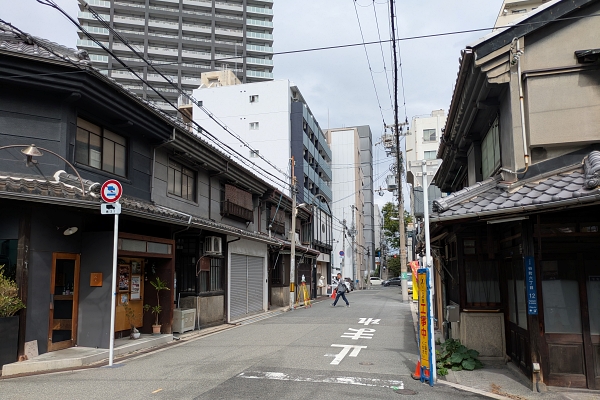
4. Karahori Shopping Street
Karahori Shopping Street runs about 800 meters between Matsuyamachi-suji and Uemachi-suji. Located east of Namba and Umeda, it sees far fewer tourists.
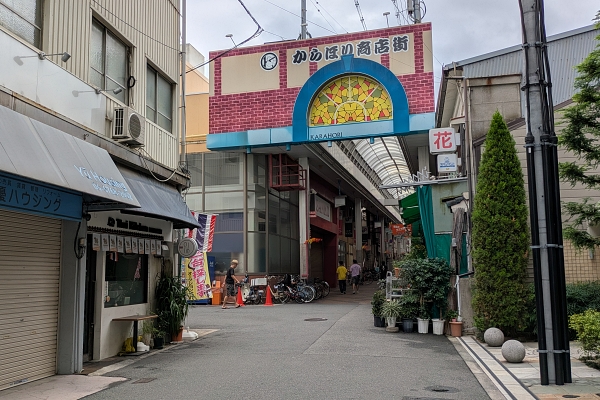
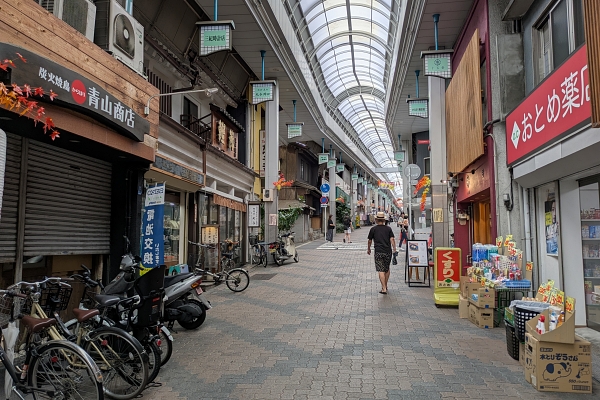
The street follows the line of a former dry moat near Osaka Castle, creating noticeable elevation changes. That alone makes it unusual in a generally flat city.
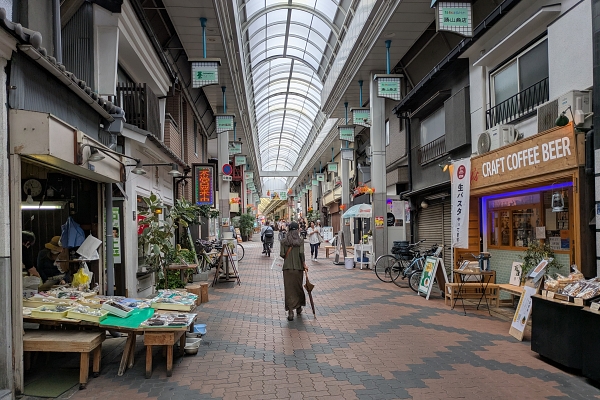
Because the area avoided heavy damage from WWII, older buildings remain. Narrow storefronts, uneven pavement, and quiet side alleys give the area a distinctly older feel. Small cafés, independent restaurants, and local shops give Karahori a slower, residential feel.
5. Senbayashi Shopping Street
Senbayashi Shopping Street links Senbayashi-Ōmiya Station with Senbayashi Station on the Keihan Line. Despite sitting outside the city center, it stays consistently busy.
Unlike many declining arcades, this one thrives. Specialty shops line the street, including greengrocers, fishmongers, and pharmacies. Prices are low, especially at produce shops. Vendors call out daily deals, and shoppers often stop to chat rather than rush through.
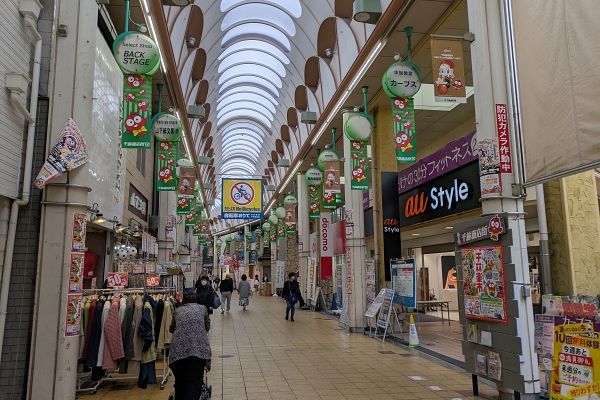
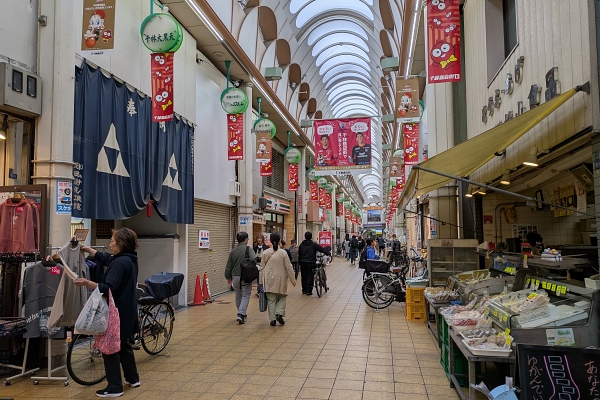
Daiei, one of Japan’s major supermarket chains, originated here, adding to the street’s local importance.
6. Doguyasuji Shopping Street
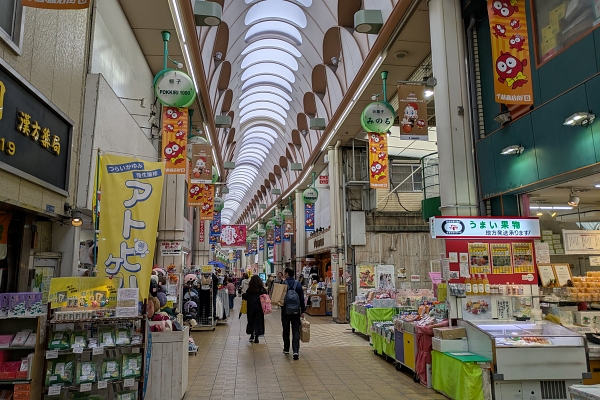
Doguyasuji is a short, 150-meter street near Namba, tucked between Sennichimae and Nihonbashi. The entrance is easy to miss, but Grand Kagetsu Theater makes a good landmark.
True to its name, Doguyasuji specializes in kitchen tools. Knives, cookware, tableware, and restaurant supplies fill the shops. While it once catered mainly to professionals, it now welcomes casual visitors.
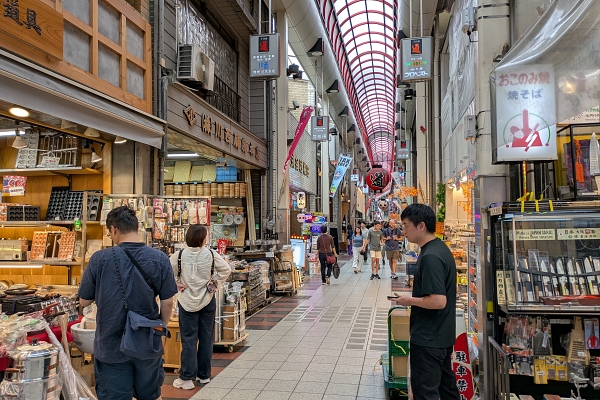
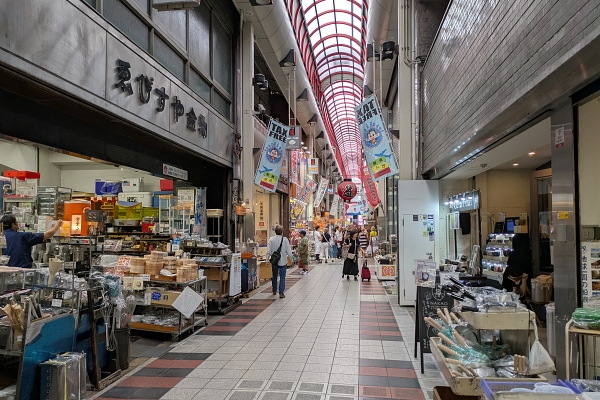
Browsing alone is part of the fun, even if you don’t plan to buy anything. The clink of metal and stacked cookware fills the narrow street.
7. Janjan Yokocho
Officially called Nanyo-dori Shopping Street, Janjan Yokocho runs from Dobutsuenmae Station to Tsutenkaku Tower. The name comes from the shamisen music that once echoed through the street.
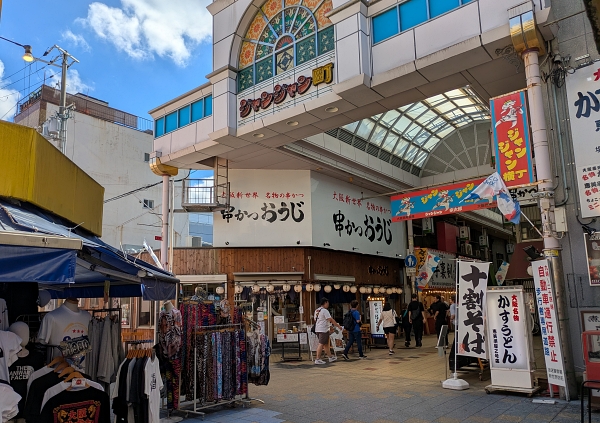
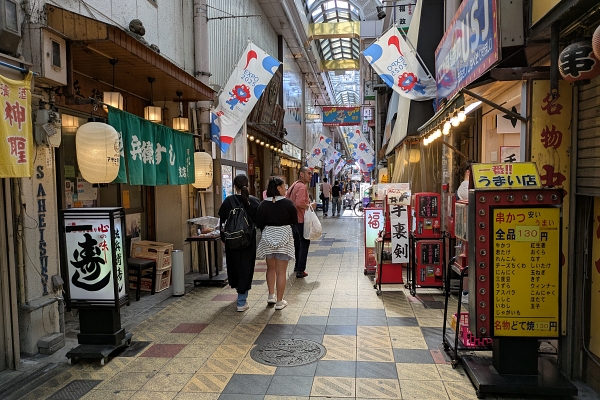
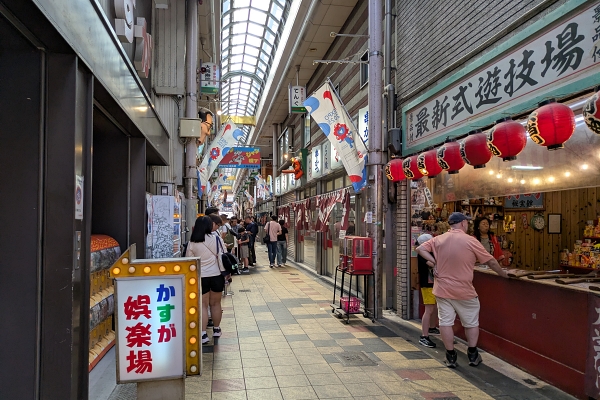
The lane is narrow, crowded, and lined with kushikatsu shops, standing bars, and casual eateries. Some businesses are decades old, while others opened recently to meet tourist demand.
Once a purely local street, it has become one of Osaka’s most visited food corridors. Even so, the street still feels cramped and informal.
8. Hankyu Higashidori Shopping Street
Umeda often feels more polished than Namba, but Hankyu Higashidori Shopping Street shows its casual side. This area is packed with affordable bars and izakaya.
Several connected streets, including Ohatsu Tenjin-dori and Higashi-naka-dori, form the larger Higashidori district. During the day, it feels calm. At night, laughter, cigarette smoke, and overlapping conversations spill into the street.
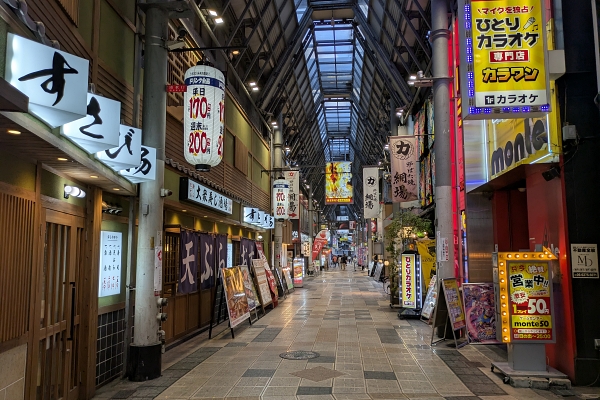
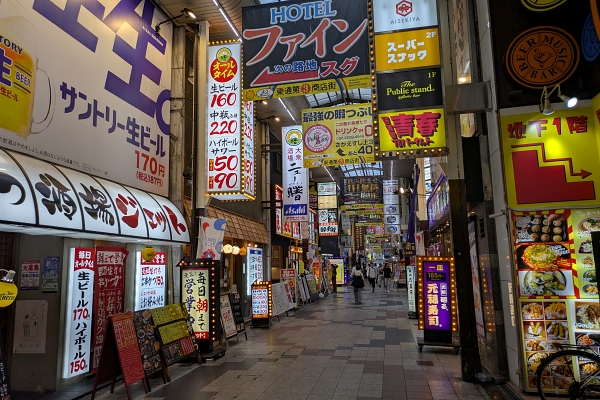
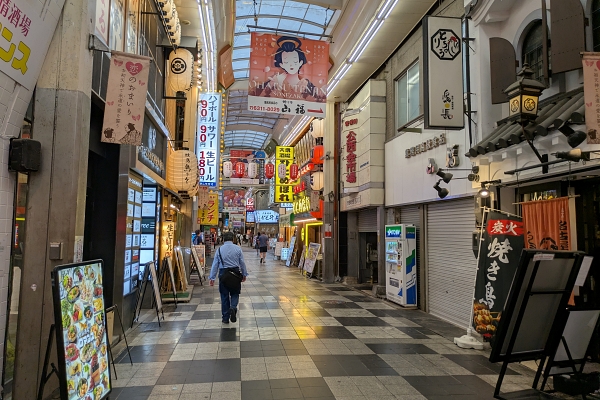
Near Umeda Station, there are surprisingly few shopping streets, which makes this area stand out. It feels subdued during the day, but once evening arrives, the atmosphere shifts and the crowds swell. As you move farther from the station, the shops gradually become more adult-oriented.
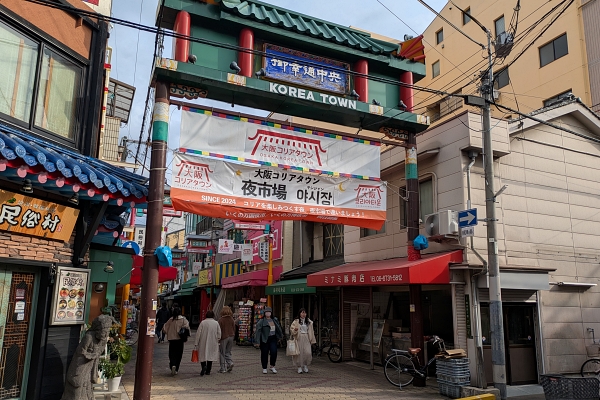
9. Tsuruhashi Shopping Street (Korean Town)
In front of Tsuruhashi Station is Tsuruhashi Koreatown. Numerous shops crowd the arcade, packed tightly together like a maze. Upon getting off the train, the smell of yakiniku wafts from restaurants, and the Narrow passages twist through tightly packed shops selling kimchi, clothes, cosmetics, and other Korean groceries.
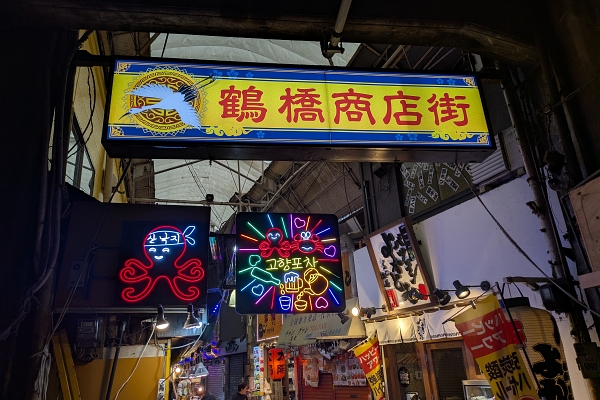
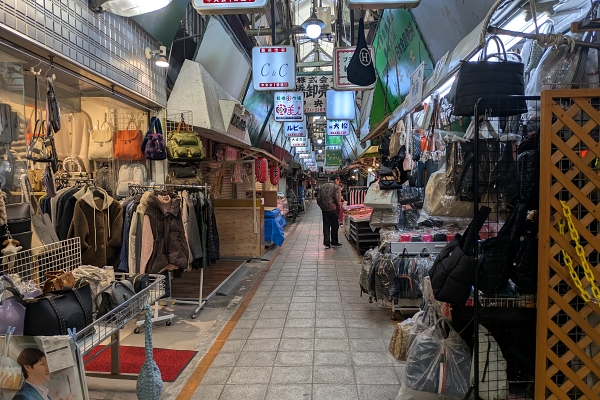
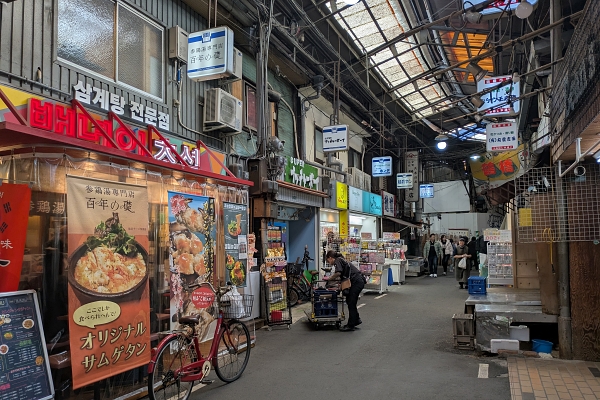
At the far end sits Tsuruhashi Hontori Shopping Street, where fewer shops remain open, but several authentic restaurants operate. For a livelier scene, Ikuno Korean Town is a 15-minute walk away and draws a younger crowd.
10. Juso Shopping Street
Juso sits just minutes from Umeda on the Hankyu Line. Around the station, multiple shopping streets spread outward, forming a dense cluster rather than a single arcade.
Tommy Town, Juso Friendly Shopping Street, and Juso Honmachi are all part of the larger Juso area. Old shops mix with newer ones, creating a lived-in atmosphere. You’ll see commuters, regulars, and bar-hoppers sharing the same narrow sidewalks.
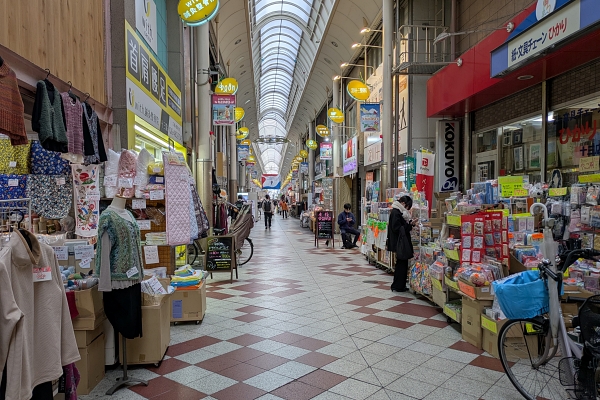
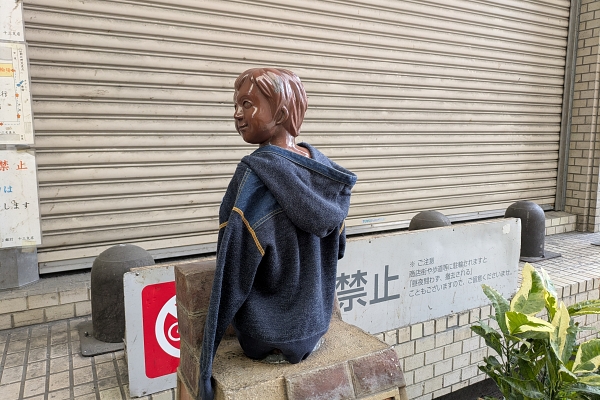
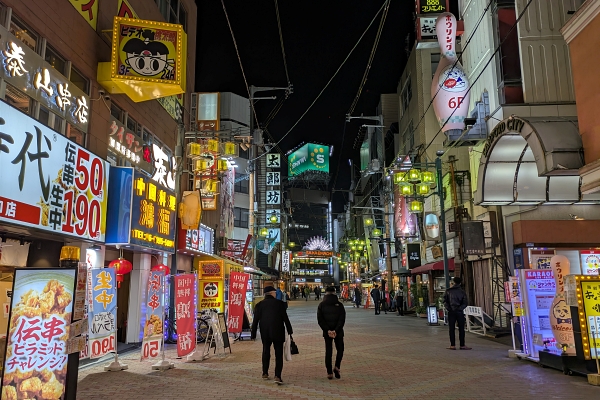
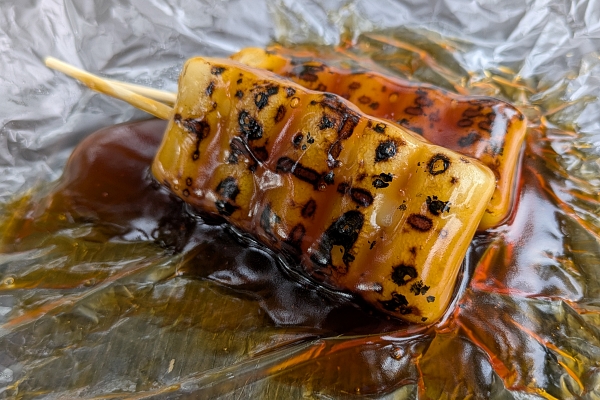
One local favorite is Kiyasu Sohonpo’s mitarashi dango in Tommy Town. The dumplings are grilled on the spot, coated in sweet soy sauce, and are worth the short wait.
Walking Under the Arcades: The Everyday Reality of Osaka Shotengai
Many of Osaka’s shopping streets were never meant to be flashy. They grew as practical places to buy groceries, household goods, and quick meals, serving the same neighborhoods day after day.
That role has been shrinking. As younger residents rely more on supermarkets and convenience stores, some shotengai struggle to stay lively. Shuttered storefronts sit next to shops that still open every morning, run by owners who have been there for decades.
Walking through these streets today feels a bit like stepping into a slower layer of the city. Seen together, these examples of Osaka shotengai reflect both what has been lost and what quietly remains. You see how people once shopped daily, how neighbors crossed paths, and how local life was organized before everything moved indoors. They may no longer be essential in the same way, but they still offer one of the clearest ways to connect with Osaka’s everyday past and present.
A Quieter Side of the City
They move between stations, food queues, and landmarks, collecting highlights without ever seeing how the city actually works. The everyday Osaka—the one built around errands, routines, and familiarity—rarely makes it into photos.
That version of the city still exists inside its covered shopping streets. Shotengai aren’t destinations so much as infrastructure. They are places where the pulse of day-to-day life plays out—unglamorous spaces where local shopkeepers know your name and ask about your mother’s dog. They’re the Tuesday lunch spot, not a special occasion.
Some are crowded and loud, others feel tired and half-forgotten, but none of them are trying to impress anyone. That’s also why many of them feel invisible now. As shopping moves indoors and online, these streets no longer define daily life the way they once did. Younger residents pass through them without lingering. Tourists often don’t notice them at all.
But if you want to understand Osaka beyond its surface, these streets say more than any skyline or food list ever could.


Leave a Reply