Exploring Sekigahara Battlefield (Western Army)
Sekigahara, located on the border between Gifu and Shiga Prefectures, is the very site of the Battle of Sekigahara, Japan’s most famous civil conflict.
Although little remains today to show what the battlefield looked like at the time, visiting the historic sites connected to the warriors who fought here is a fascinating experience. As you walk around the area, it’s easy to picture the events that took place here more than 400 years ago.
Exploring Sekigahara Battlefield (Western Army)
Sekigahara is surrounded by high mountains to the north and south, with the Nakasendo Road running east to west through the flat land between them. The terrain forms a natural bottleneck, making it an ideal location for a battle.
Because of this terrain, many of the Western Army’s positions were set up on small hills and mountain slopes, while the Eastern Army’s camps were mainly located on the open plains. Today, signs marking the different campsites can be found throughout Sekigahara, but bringing a map is still a good idea to help you find them.
The roads in the area are quite narrow, so I wouldn’t recommend exploring Sekigahara by car.
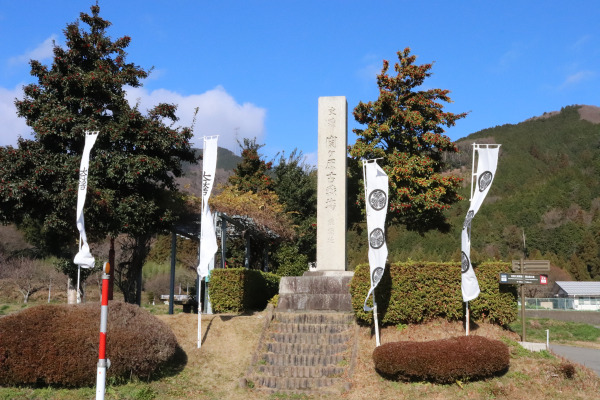
Ishida Mitsunari’s Camp Site
Mt. Sasao is about a 15-minute walk from Sekigahara Station. Although it is called a mountain, it is really more of a small hill. This was where Ishida Mitsunari, one of the key figures of the Western Army, established his headquarters during the Battle of Sekigahara.
The climb takes only about five minutes, and from the site of his headquarters, you can enjoy a sweeping view of the entire battlefield. As one of the most popular historical sites in Sekigahara, it attracts quite a few visitors.
It is said that Mitsunari stationed around 6,000 troops here, although the area feels a little cramped. I imagine that some of his forces must have been positioned at the foot of the mountain as well.
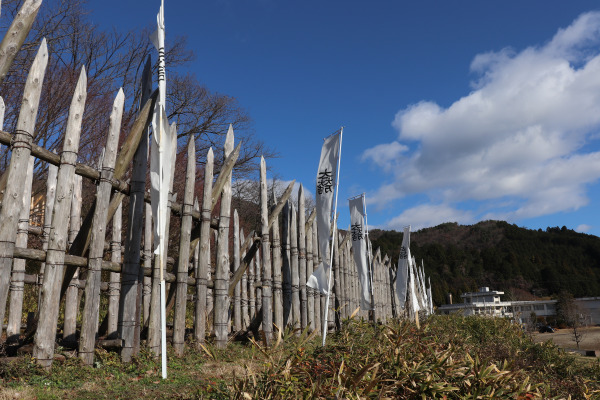
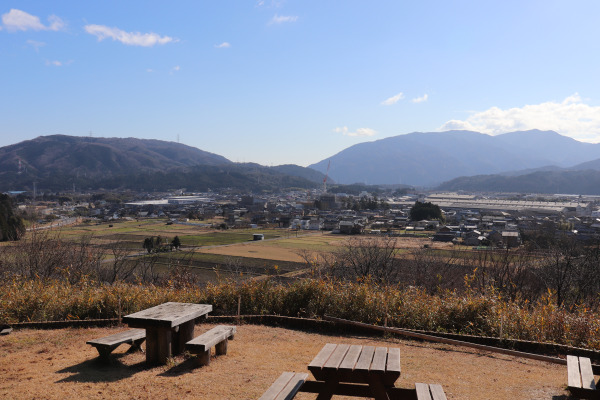
At the very foot of Mt. Sasao lies the site of Shima Sakon’s camp. Sakon was one of Mitsunari’s most trusted commanders, but during the Battle of Sekigahara, he engaged in fierce combat with Kuroda Nagamasa, whose forces were stationed nearby, and was killed in battle.
Since the mountain is not particularly high, it is possible that Mitsunari witnessed Sakon’s final moments from close by.
Meanwhile, the Otani forces, one of Mitsunari’s key allies in the Western Army, were gradually overwhelmed after the betrayal of Kobayakawa Hideaki and others. Watching his allies fall one after another, Mitsunari realized that defeat was inevitable and fled toward Mt. Ibuki, which rises behind the battlefield.
Shimazu Yoshihiro’s Camp Site
About a 10-minute walk south of Mitsunari’s camp on Mt. Sasao lies the site of Shimazu Yoshihiro’s camp. The remains of the camp are located within the forest surrounding the shrine.
Shimazu Yoshihiro was one of the leading figures of the Western Army. Although it is sometimes said that he was originally expected to join the Eastern Army, he was actually opposed to the Tokugawa forces. However, during the Battle of Sekigahara, rather than actively engaging the enemy, he appears to have taken a more cautious, wait-and-see approach.
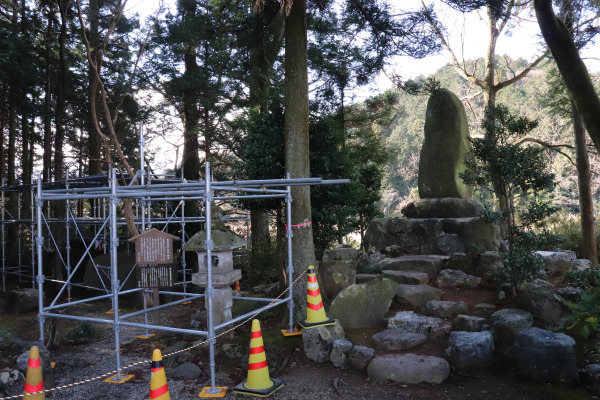
It seems that Yoshihiro had little intention of actively engaging in battle and instead focused on defending his position. However, because they never received words that Mitsunari had retreated, his forces were left behind on the battlefield and soon found themselves surrounded by the enemy.
Even so, they did not panic. They broke through the enemy lines near Ieyasu’s camp and managed to escape. During their retreat, they seriously wounded Ii Naomasa, one of the Tokugawa’s Four Heavenly Kings.
Konishi Yukinaga’s Camp Site
A short walk from the site of the Shimazu encampment brings you to the site of Konishi Yukinaga’s camp, with Mt. Kitatenma rising behind it. This area is believed to be the place where the Battle of Sekigahara began.
According to historical accounts, the Ii forces advanced through the Fukushima forces, who had been assigned to serve as the vanguard, and opened fire on the Ukita forces. The Ukita forces then returned fire, marking the beginning of the battle.
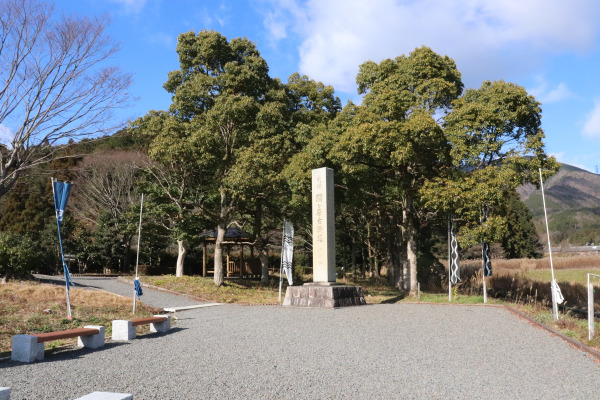
Konishi Yukinaga was a devout Christian daimyo. His father was originally a merchant in Sakai, and Yukinaga was later recruited by Ukita Hideie to become a samurai. Serving under Toyotomi Hideyoshi, he distinguished himself during the Japanese invasions of Korea and became a close friend of Ishida Mitsunari, which led him to fight on the side of the Western Army at the Battle of Sekigahara.
Partly due to the exhaustion of his forces after the Korean Campaign, he was able to bring only around 4,000 troops to Sekigahara. Unlike some commanders who took a wait-and-see approach, Yukinaga fought bravely until the very end. However, his efforts were not enough to change the course of the battle, and he was eventually captured and executed at Rokujo Kawara in Kyoto
Ukita Hideie’s Camp Site
A short walk through the woods from Konishi Yukinaga’s Camp Site brings you to Ukita Hideie’s Camp Site. With Mt. Minami Tenma rising behind it, Hideie deployed his forces around Tenma Shrine at the foot of the mountain.
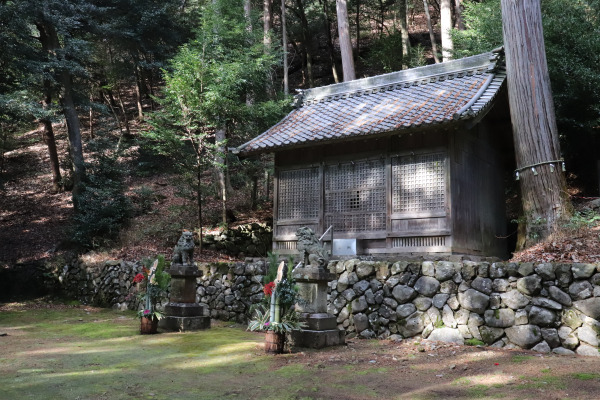
Ukita Hideie had been one of Hideyoshi’s favorites since childhood and fought alongside him in numerous campaigns. He appears to have felt a deep sense of loyalty toward Hideyoshi, who had even granted him the character Hide (秀) from his own name, and for that reason joined the Western Army.
At Sekigahara, Hideie commanded around 17,000 troops, the largest force in the Western Army. There is no way this small area could have accommodated so many soldiers, so his army must have been spread across the slopes and foothills of Mt. Minami Tenma.
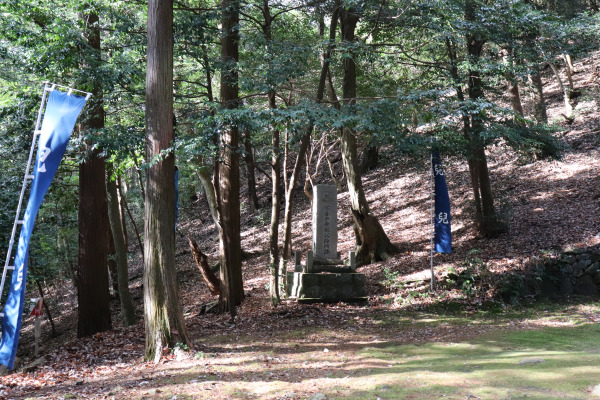
At Sekigahara, Ukita Hideie fought fiercely against the Eastern Army forces led by Fukushima Masanori. However, like many of the Western Army commanders, his forces were thrown into disarray by Kobayakawa Hideaki’s betrayal and eventually overwhelmed.
Hideie escaped the battlefield and fled to Satsuma, but he was later captured. Although he was spared execution after the war, he was exiled to Hachijo-jima island, a remote island south of Edo. He spent the rest of his life there and died in 1655.
Otani Yoshitsugu Camp Site
From the site of Ukita Hideie’s camp, cross the Fujikogawa Dam and follow the path a short distance into the hills to reach the site of Otani Yoshitsugu’s camp.
Among the many figures associated with the Battle of Sekigahara, none is remembered more fondly today than Otani Yoshitsugu. He was one of Mitsunari’s closest friends, and when he learned of Mitsunari’s plan to rise against Tokugawa Ieyasu, he reportedly tried several times to talk Mitsunari out of it. In the end, however, he chose to join the Western Army after Mitsunari repeatedly asked for his help.
By that time, Yoshitsugu was said to be suffering from a serious illness and had already lost his sight, yet he chose to fight alongside Mitsunari at Sekigahara.
From Otani Yoshitsugu’s camp, Mt. Matsuo, where Kobayakawa Hideaki had stationed his forces, is clearly visible. Was this merely a coincidence? Looking at the two positions, it is hard not to wonder whether Otani suspected that Kobayakawa might betray the Western Army.
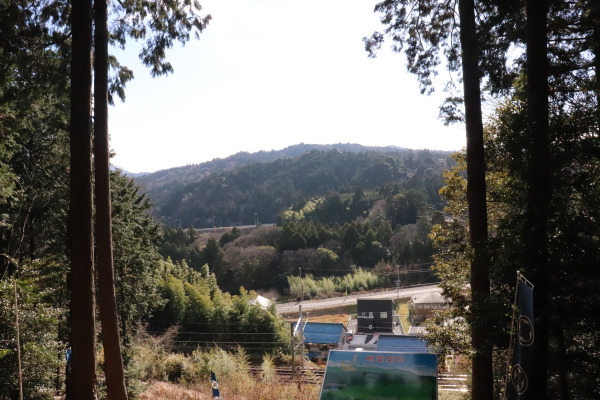
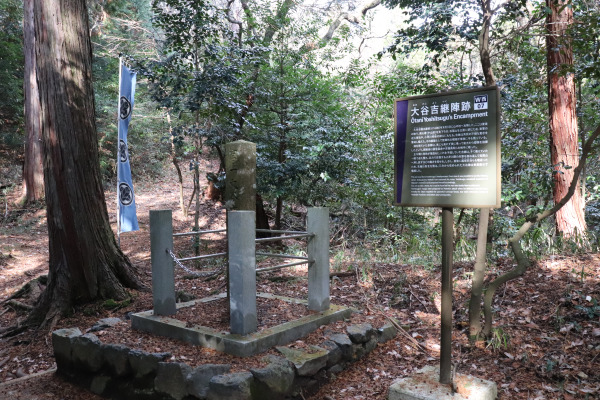
Facing Kobayakawa Hideaki’s 8,000 troops with only around 600 men of his own, Otani Yoshitsugu fought bravely. However, as more and more commanders turned against him, he realized there was little hope left and ultimately chose to take his own life.
After the Battle of Sekigahara, a monument was erected in his memory, honoring his loyalty and determination. Even today, it remains one of the most visited historical sites in Sekigahara.
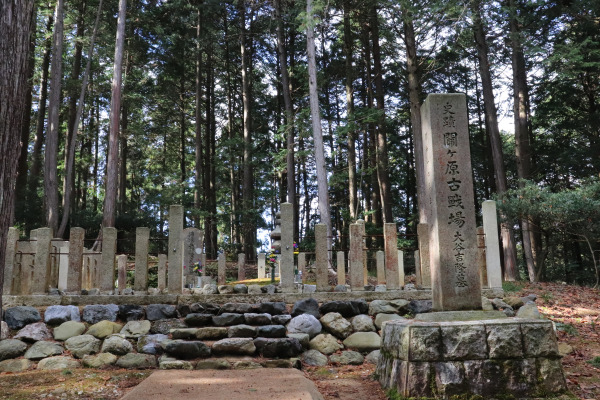
Kobayakawa Hideaki’s Camp Site
Kobayakawa Hideaki was the man who ultimately decided the outcome of the Battle of Sekigahara. His camp was located at the summit of Mt. Matsuo, in the southern part of Sekigahara.
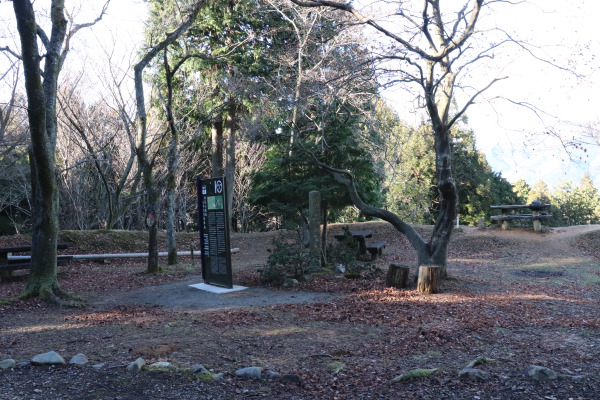
At 293 meters high, the mountain is not particularly tall, but the climb is quite steep and takes around 40 minutes one way. Still, it is hard to say you have truly explored Sekigahara without making the effort to visit this important site.
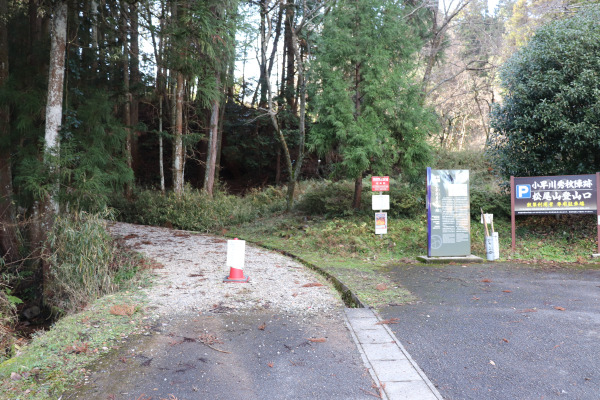
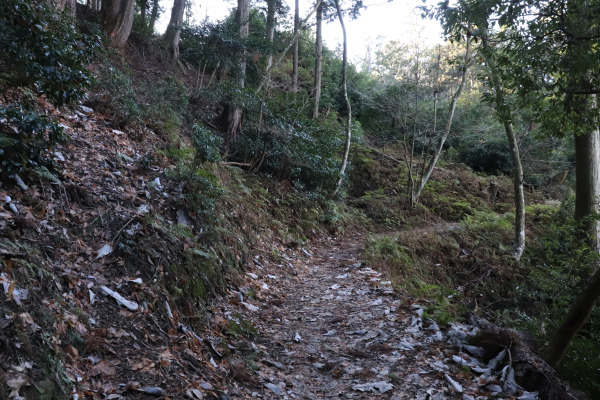
The summit of Mt. Matsuo is relatively flat, and a mountain castle once stood here. Even today, some traces of the old fortifications, such as earthen walls, can still be found.
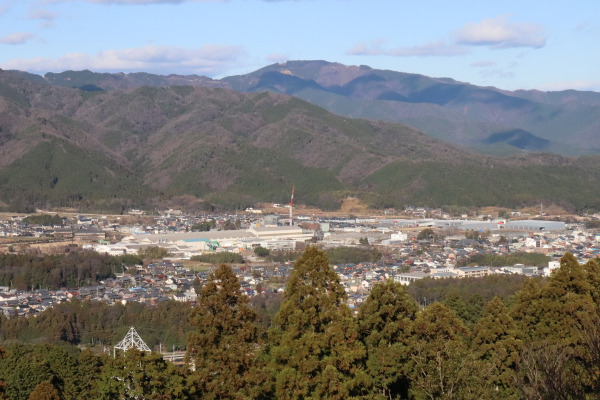
From here, you can enjoy a panoramic view of the entire Sekigahara battlefield. In the end, the Western Army was defeated largely because Kobayakawa Hideaki switched sides and Otani Yoshitsugu was killed. In that sense, Kobayakawa’s betrayal can be seen as the decisive turning point of the Battle of Sekigahara.
According to the conventional account, Kobayakawa Hideaki was still unsure whether to side with the Western Army or the Eastern Army. However, he was struck by a bullet fired by Ieyasu, which prompted him to switch sides.
However, standing here on the mountaintop, it is hard to imagine being able to clearly see what was happening on the battlefield below. Because of that, I cannot help but question the story that Hideaki changed sides because he was intimidated by Ieyasu’s gunfire.
While many of the Western Army commanders who switched sides were punished after the Battle of Sekigahara, Hideaki was granted the domain of Okayama. Given this, some historians have questioned whether his betrayal had been planned from the very beginning.
Unfortunately, Hideaki died suddenly just two years after the battle, reportedly due to health problems caused by heavy drinking.


Leave a Reply